Showing posts with label children. Show all posts

Tuesday, May 14, 2013

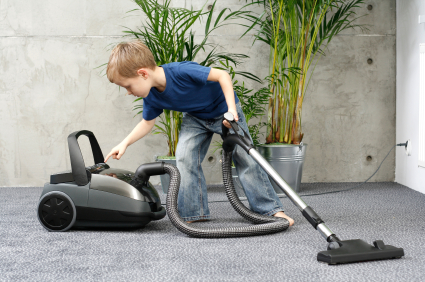
Chores Teach Children, It's Not All About You


Sue Shellenbarger wrote an important piece in the Wall Street Journal on children and chores a while back. 

How much time each day, on average, does a 6 to 12 year old spend on household chores?

"If you guessed more than a half-hour, you're wrong. Children are spending a mere 24 minutes a day doing cleaning, laundry and other housework -- a 12% decline since 1997 and a 25% drop from 1981 levels, says Sandra Hofferth, director of the Maryland Population Research Center at the University of Maryland.

While most parents today focus mostly on teaching kids self-reliance -- keeping themselves clean, fed and botulism-free -- the benefits of learning housework run deeper. For example: After controlling for other factors, U.S. marriages tend to be more stable when men participate more in domestic tasks, says a study of 506 U.S. couples published in 2006 in the American Journal of Sociology.

Housework has unique value in instilling a habit of serving others. Analyzing data on more than 3,000 adults, Alice Rossi, a professor emerita of sociology at University of Massachusetts Amherst, found doing household chores as a child was a major, independent predictor of whether a person chose to do volunteer or other community work as an adult. Thus for parents who value service, housework is an important teaching tool.

David Jackson has consistently required his twins, 16, to help around the house, starting as toddlers when they began picking up their toys and adding harder chores, such as stocking bathrooms or mowing the lawn, at each new stage. He sees the chores as a way of teaching empathy and "stewardship -- taking care of the community assets," says the Tulsa, Okla., father. "It helps them realize the world is not all about them."

Tuesday, March 01, 2011

Children Under 5 Make Up the Bulk of Americans Treated in the ER After Swallowing Medications

Home sick today and popping medications, advil, and vitamins, gave me this chance to blog about Liz Szabo's recent piece in USA Today about child safety and medications.

According to Szabo, "Most such poisonings occur in 1- and 2-year-olds — an age group whose curiosity and climbing skills often outstrip their judgment — according to a new report from the Substance Abuse and Mental Health Services Administration. About 90% of child poisonings happen in the home, according to the Consumer Product Safety Commission. Thanks partly to better caps and packaging, child poisoning deaths have fallen by 80% since 1972.

And most people don't store medications properly, says Lara McKenzie of Nationwide Children's Hospital in Columbus, Ohio. When people are sick with colds, they often leave cough syrups and other drugs by the sink. More and more people also now request "easy open" caps on bottles or day-of-the-week pill organizers, Casavant says. That can be especially dangerous when children get into a grandparent's open purse or begin exploring her house."

"Experts offer these tips to keep children safe:
•Properly dispose of unneeded or expired medications, advises the Substance Abuse and Mental Health Services Administration.
•Don't take medications in front of children, which may inspire them to try to imitate you, Casavant says. Tell children never to take medication unless you give it to them.
•Never refer to pills as candy.
•Because children can sometimes open child-resistant caps, keep medications out of sight, out of reach and in a locked container.
•Keep the national poison control center number — 800-222-1222 — on or next to all of your phones."

Tuesday, January 05, 2010

Reader Insists: Dr. Singer, Practice What You Preach! Now You Decide

Pediatric Nurse Cindy criticized me after reading my October column about the man I saw mowing his lawn with his infant in a snugly on his back. My question remains: Isn't there a big difference between taking action when a child appears to be in danger and the child's parent is right there? Here is my follow-up parenting column on child safety published on January 3, 2010 in the Home News Tribune:

If you see a child in a dangerous predicament, would you intervene? Assuming your answer is yes, what if the danger unfolds in the presence of the child's parent? That's a different story and I'd recommend using common sense. It burns me up to see a parent acting irresponsibly. In fact, a Connecticut mother was recently charged with a felony (risk of injury to a minor) after police discovered that her 3-year-old child wandered from their home alone and crossed a busy street.

Home News Tribune reader Cindy took umbrage with my October column that described an irresponsible father mowing his lawn with his infant in a snugly on his back. Didn't the father recognize this as a dangerous situation? Cindy insisted, "Most inexcusable is that you did see the danger Dr. Singer, but did nothing. As a marriage therapist, I am quite certain you could have communicated in an appropriate and effective way, the danger of the situation and the risk to this young child. Practice what you preach, Dr. Singer! Child safety is everyone's responsibility." You won't be surprised to learn that Cindy (an RN) worked in pediatric I.C.U. for 5 years, and now works at a children's rehabilitation hospital, where the primary diagnosis is traumatic brain injury and spinal cord injury.

Cindy wants to change me from being a passive observer of human behavior into an activist. But I wonder if child safety is really everyone's responsibility? Or is it only in the absence of the child's parent?

Here's my absence-of-a-parent story that took place last January in Jerusalem in the Old City. My wife, daughter and I sat down to a slice of hot pizza in an outdoor cafe on a chilly afternoon. I noticed a mother nearby with an infant in a stroller and a young Israeli boy (about 4 years old) with a huge knapsack on his back. A few minutes later, I glanced back and saw the boy, but the woman and infant had disappeared. Had the woman forgotten her toddler? The young boy shuffled away alone and I put down my pizza, grabbed my knapsack, and followed him.

My wife asked where I was going, and I responded that I think a mother just walked away and forgot to take her toddler. The little boy proceeded up dozens of steps, which overlooked the Cardo archeological excavation, and turned right onto a busy pedestrian thoroughfare. I was 20 feet behind the toddler, when my daughter came running after me and reprimanded, "Dad, you are going to get arrested for stalking that little boy! He obviously knows where he's going and if he turns around and sees a six-foot American man following him, he'll be scared to death."

Nearby, a middle-aged woman asked us if everything was OK, and I expressed my concern that this child wandered away from his mother, and is lost and walking the streets alone. She replied, "I live nearby, and he's not lost. Children in this neighborhood usually walk home from school by themselves. It's like the old days when people felt safe about their children being on the streets."

As a father, I could not sit and eat lunch while a little lost boy (in my mind) was wandering through the streets alone. I now understand that there are significant cultural differences when it comes to child safety, and the question of whether child safety is everyone's responsibility. Bottom line for me: in the absence of a parent, take action when a child appears to be in danger.

Be Counted columnist Dr. Alan Singer is a marriage therapist in Highland Park. Respond to this column via his Web site, www.FamilyThinking.com
________________________________________

Thursday, October 01, 2009

On Shpielkas Waiting for a First Child

Here's my monthly Home News column which appeared on September 22, 2009 and was titled "A First Child, and Many Anxieties". Arlene and Jeffrey are a tremendous source of information and inspiration.

When I first met with Arlene and Jeffrey, (click here to read my previous column) they had just finished their first year of marriage and were grappling with the questions:

When is the best time to have our first child?
What's the best spacing between our children?
What is the ideal number of children for a family to have?

One decision has been made; they are expecting their first child in three months. We met again recently to talk about their new perspective on life, labeled "transition to parenthood" by social scientists. Our discussion focused primarily on the uncertainty of life with an infant, striking the right balance of work and family, and their dreams for their child.

Arlene's second, third, and fourth months of pregnancy were very difficult, but she's feeling much better now. On seeing the first sonogram, Jeffrey commented, "It was a very moving experience to see the arm move and hear the heartbeat, but I didn't start crying."

Arlene shared her anxiety, but not about delivery; rather, about motherhood: "It means a lifetime of responsibility; it's life-changing! "I am excited but nervous, because I have no idea what it's going to be like. I'm an only child and didn't have any other babies at home growing up."

Arlene emphasizes that she had a happy childhood, but she always wanted a sibling. "My friends were jealous of me and said, "You have your own room and your own toys.' My reaction was, "Oh yeah, big deal. I wanted to share it with a sibling.'?"

Echoing Arlene's anxiety about child rearing, Jeffrey remarked, "We haven't talked about this much because we have no idea what this will be like; I have no idea how this works with a newborn." We discussed infancy for a while and it turns out that they have several good books at home. Jeffrey has actually read more about babies than Arlene so far.

On the topic of Jeffrey's long work hours, Arlene complained, "Sometimes he works ridiculous hours late at night, even from home. Then he's exhausted and we don't spend quality time together. "I enjoy time with him. I'm used to it and I feel like I need it. Now I worry with the baby coming soon, how does everything get balanced? When the baby arrives, it will add another whole level of busy-ness."

Sensing her frustration, Jeffrey responded to Arlene, "I have made certain work-related changes, and you see that. I have people working for me, and I have a lot of help these days to get all my consulting jobs done." I am encouraged by this productive dialogue between them, because they are grappling with the timeless issues of parenting and the work-family balance, which families have dealt with for centuries.

Rest assured, Arlene and Jeffrey are good communicators in a very strong marriage. They will make it through this phase of their family life. As we concluded our session, I asked about their dreams and hopes for their forthcoming child.

Jeffrey hopes for a healthy baby, and "to raise our child in such a fashion that he/she grows to become independent, enjoys life, and has a lot of opportunities." Arlene wants those things as well and is hoping that their child will be respectful. She explained, "I am excited to see who we created and how our two personalities are going to become part of our child. Sure, I am curious about appearance too, but mostly personality."

Be Counted columnist Dr. Alan Singer is a marriage therapist in Highland Park. Respond to this column via his Web site www.FamilyThinking.com.
________________________________________

Thursday, August 27, 2009

Seeing the World Through a Child's Eyes

The things that fascinate adults may not impress children at all and vice versa. In my latest Home News Tribune column I discuss this topic.

You can try to impress young children by showing them the wonders of the world, but it might not be a good investment of your time. What you think will leave them awestruck doesn't, and the seemingly minor details of life will amaze them. So don't try to predict what will fascinate them. Instead, just observe, listen, and learn.

An article that sparked my interest in this topic appeared in The New York Times: "Test Subjects Who Call the Scientist Mom or Dad." In it, Pam Belluck describes scientists who use their children as research subjects. Studying their own children allows researchers a more in-depth investigation. Their children make reliable participants and are willing subjects in an era of scarce research funding.

One MIT professor embedded 11 video cameras and 14 microphones in ceilings throughout his house; he recorded 70 percent of his son's waking hours for his first three years. He amassed 250,000 hours of tape for a language development study that he called "The Human Speechnome Project," according to Belluck.

Similarly (and don't tell my daughter and son-in-law) I am constantly studying my toddler grandson's every move and word, but without cameras and microphones. I cherish the opportunity to watch his growth and development up close and in real time. I soak up every detail of what he sees, hears, touches, and interacts with. The phone rings and he says, "Uh-oh," which is an interesting reaction. He's fascinated by a daddy long-legs bug and pursues it with no fear whatsoever. I was yelling, "Yuckee bug ? don't touch!" and he continues on his mission to investigate how something so small can move so fast on its own.

He could say "up" or "outside" to me, since he regularly uses these words, but sometimes he'll simply choose to walk over and grab my finger, start pulling, and take me exactly where he wants us to go. Dare I attempt to guess what he's thinking, or what he finds interesting? Not a chance.

Recently, when my grandson was visiting our home, there was a backhoe on our block excavating a basement for a new house. I came home from work, ran inside, grabbed my grandson and his jacket, and hurried down the block to watch the backhoe with him. The machine operator saw us, waved, and beeped his horn. In my mind, I couldn't imagine anything more exciting for a little child to experience. That's when my grandson turned, pointed and screamed "Ball!" He was thrilled to point out to me that there was a basketball sitting nearby on another neighbor's lawn. That which I figured would mesmerize him, clearly did not.

Do adults know what impresses young children? Try asking our "father-in-chief" of the United States. While appearing on the "Tonight" show several months ago, President Barack Obama described how impressive the ride is in Marine One. The helicopter lifted off the White House lawn and headed for Camp David. Below, symbols of our nation's history were in full view.

Soaring higher, they flew over the Washington Monument and the Lincoln Monument. Quite an impressive sight, don't you agree? Sasha Obama, while scanning the amenities of the presidential helicopter, was oblivious to the magnificent view, and asked her Dad, "Can I have one of those Starburst candies in the jar?" She was appreciating Marine One on her own childlike level and her father was intuitive enough to understand that.

This column is dedicated to our grandson on his second birthday.
Be Counted columnist Dr. Alan Singer is a marriage therapist in Highland Park. Respond to this column via his website http://www.familythinking.com/

Monday, March 09, 2009

Kids Make You Happy (Not): More Discussion

"The key to happiness in life is low expectations" (author unknown).
Research that shows Kids don't make you happy does not trouble me in the least. I am happy that my wife and I decided to have kids and we have 4 wonderful children, 2 of whom now have terrific spouses. Click here to listen to Robin Simon, Sociologist at FSU, discussing last summer's Newsweek article on this very topic.

But, have I been a "happy" Dad all day-every day, since becoming a father 29 years ago? Of Course Not.
Do people have children as an antidote to depression? (I hope not)
Do people have children because they look around at the world and think, "Everyone with children....they look so happy"? (I don't think so)

The decision to have children needs to be made knowing that there are rewards for parenting which are deep and fulfilling to be sure. But, one of the rewards, if you asked me, is certainly not automatic happiness. There is abundant happiness in parenting; it's just not 24/7.

So if you're thinking of having kids to bring you happiness, please think again.

Tuesday, February 24, 2009

Research Status: Babies Born in Winter are Less Intelligent

This research is still as bogus as when I blogged about it last month, but since my son-in-law says that simply mentioning this topic will draw major attention to my website....well hey, I'm always up for a good experiment. Folks, correlation is not causation and please click here to read how I approched this topic previously.

Can we please discuss some research that is more interesting?
Like Liz Szabo's article on just how early children get rhythm. It's a small study, but a fascinating one. 2 and 3 day old infants can perceive musical patterns and even take note when a drummer misses a beat! The researchers suggest that it's possible that babies are born with a musical sense because it helps communication.
It's a short and fascinating piece.

Tuesday, February 17, 2009

The Large Family ShowBiz Boom and More

Kate Zernike does a masterful job of describing large families and barely mentions the world's newest octuplets (big plus).
She describes 3 TV shows on TLC at the beginning of the article (click here to read it).

Then she delves into some key elements of the discussion:
*Smart women choose career; ambitionless women have children
*Large families are presumed to be really rich having children as status symbols, or really poor living off the dole
*Large families have an economy of scale
*Large families are some of the Greenest families

ENDNOTE: When I am asked by couples, "How many kids do you think we should have?" my response is always: as many or as few, as long as you think it through. To read my other posts on large families, please click here.

Tuesday, January 06, 2009

Private Time Indispensable to Marriage by Dr. Alan Singer

Here is my 3rd and final column describing the couples I surveyed who are celebrating their 30th Anniversaries. It was published in the Home News Tribune on December 17, 2008. Robin and Michael refer to marriage as "an evolving state". Is that a good thing? Read below and I invite you to post a comment.

Nine New Jersey couples who are celebrating their 30th wedding anniversary this year responded to a survey I conducted. This is the third and final column devoted to their responses. I asked each couple what they wanted more time for. Responses included: we want more time together, family vacations and watching our grandchildren grow up. In the fast-paced, two-career family paradigm that is so prevalent, what couples want is more time together. But, two comments concern me. Susan explained, "I wish I made more time for myself and my husband, but in my life, everyone else came first." And Heather stated, "Once the kids were born, we never made time to be alone, just the two of us." Whoa! Red flag!

When couples have a child, they tend to put their marriage on the back burner. That is one reason that researchers have found that marital satisfaction tends to decrease with the arrival of each child. After life-with-a-newborn settles into a routine, couples must dedicate themselves to nurturing their marriage as much, even more than nurturing their children. Children need their parents to have a strong marriage first and foremost; to be Super Mom and Super Dad comes second.

These couples believe that the institution of marriage has changed in 30 years and not necessarily for the better. Susie and Barry: Divorce is less of a stigma. Larry and Judy: People give up too easily and get divorced without trying to resolve their problems. Linda and Leonard added, "Marriage is not a toy, that if you don't like it you find something else; It's a lifetime commitment." Professor Bill Doherty (University of Minnesota) in a lecture delivered in 2001 refers to marriages today in the context of our consumer society where everything is temporary: "New is what sells — the past is meaningless. Only the future counts. Will my rewards be there in the future and am I getting enough out of this relationship?"

Last are several responses to the question, what is the most important thing that you learned about marriage? Most important to Linda and Leonard is, "The effect of being loved and showing love can only make you a better person." (Research supports them on that.) Suzie and Barry go a step further: "Love is not enough to sustain a marriage; you have to work on maintaining the love and the relationship."

Robin and Michael learned that marriage is "an evolving state." That response intrigued me, so I asked them to elaborate. "Nothing in life stays the same; it changes each day with each new experience and the challenges that life presents." They added, "As we grow and mature and are molded by what life brings us, it necessarily affects marriage. The hope is that your spouse helps you through those changes and that your relationship is flexible and can accommodate change."

In a 1998 lecture, psychologist John Gottman similarly describes the importance of "shared meaning." He contends: "Everyone is searching for the meaning of life in this journey of ours. The idea of creating this meaning together with someone else in a family is very key in building this friendship in marriage using the narratives, metaphors, symbols, roles, goals, and rituals that make life meaningful. This has a great impact on friendship in the marriage and on buffering transitions in the marriage, such as partner-hood to parenthood." Thank you to the nine couples who participated in this survey and Happy Anniversary!

Be Counted columnist Dr. Alan Singer is a marriage therapist in Highland Park. Respond to this column via his Web site www.FamilyThinking.com

Sunday, July 20, 2008

Nine Couples Share Secrets to a Lasting Marriage by Dr. Alan Singer

Here is the 2nd of 3 installments about the nine couples I interviewed who are celebrating 30 years of marriage. I hope you find their responses as insightful as I did. It was published in the Home News Tribune on July 15, 2008

When nine central New Jersey couples who are celebrating their 30th wedding anniversary were asked what is the secret of a 30-year marriage, most couples gave a one-word answer. Maybe they thought the question was, what is the "secret password" of a long-term marriage? It was intriguing that this question received quite brief answers. "Patience" (Heather and Arthur). "Endurance" (Leibe and Susan). "Communication" (Steven and Diana). "Respect" (Susie and Barry). And Mitch, with his wry sense of humor, responded: "Inertia."

Let's assume that you heard the old adage about what counts in real estate: location, location, location. Based on the majority of responses from these nine couples, the secret of a 30-year marriage is: compromise, compromise, compromise. This gets to the heart of marital longevity. Do couples with enduring marriages make the transition from "me" to "we" better than couples who don't? A marriage where compromise is a basic component will be able to change and evolve, since each marriage is a dynamic entity.

Dr. Bill Doherty (University of Minnesota) refers to marriage as a "continual learning process." That's an important perspective, considering the physical and emotional changes that occur as people age. Finances, geography and careers change as well. And changes in family size tend to have a direct affect on marital satisfaction (mostly negative). Leonard and Linda, in relating the secret of a 30-year marriage, repeated two well-known mantras: 1. Try to see things through each other's eyes. 2. No matter how upset you are, never go to bed without saying "goodnight" and "I love you."

The follow-up question was, What is the most important expectation(s) that you have of your spouse on a daily basis? One reason I asked this question has to do with some fascinating research from the University of North Carolina. Wouldn't you think that couples who have very high expectations of marriage tend to be disappointed if it fails to meet those expectations and that they will not have good marriages? Not true.

"Dr. Donald Baucom found that people with the highest expectations for their marriage usually wind up with the highest-quality marriages. This suggests by holding your relationship to high standards, you are far more likely to achieve the kind of marriage you want." (Dr. John Gottman, "Seven Principles for Making Marriage Work," 1999).

Mort and Lisa expect each other "to keep in touch on a daily basis." Surely, we hard-working Americans endure stress and anxiety each day. But, that shouldn't prevent us from seizing a few minutes to touch base with our "better half." Several couples warned of the problems that result from letting job frustration spill over into family life. Susan expects Leibe to come home each day and be happy to share in her day as well. Arthur and Heather expect each other to be "kind, friendly, considerate, caring, and sharing each day." Leonard and Linda want each other to be "trustworthy, honest, loving, and supportive."

Robin and Michael provided this insight: "We expect mutual interest and support in each other's trials and tribulations and a sense of pride and gratification in each other's successes and achievements." Robin added, "Our marriage has gotten progressively better with the last five to seven years being the absolute best!" (emphasis hers). When I dug deeper into their response, they stressed the importance of couples preparing themselves for children. Numerous research studies have shown a measurable decrease in marital satisfaction with the arrival of each child. Children are the most wonderful of blessings, but the reality is that they add significant stress to a marriage.

"Early in the marriage, you are still learning how it works," explained Robin, "and then child-rearing sort of gets in the way of developing your relationship." Robin and Michael made it through those difficult years of young children and new careers. Unfortunately, not all couples are as lucky. Robin's explanation of why the last five to seven years have been so marvelous: "Our children have grown up and are more independent, giving us more time for each other."

Last is the advice that Lisa and Mort give to their grown children in their search for the right spouse: "Look for a warm, caring spouse and someone who will be your best friend." It is no coincidence that John Gottman's research (1999) strongly emphasizes this same idea. "The determining factor," claims Gottman, "in whether wives feel satisfied with the passion in their marriage is, by 70 percent, the quality of the couple's friendship. For men, the determining factor is, by 70 percent, the quality of the couple's friendship. Some men and women come from the same planet, after all."

"Be Counted" columnist Dr. Alan Singer is a marriage therapist in Highland Park. Respond to this column at Dr. Singer's Web site www.FamilyThinking.com or e-mail DrAlanSinger@aol.com "Be Counted" columnists are members of the public.

Thursday, July 17, 2008

Children's Physical Activity Drops from Age 9 to 15 According to NIH

New research shows what we've known for many years. Television, computers...aka "screen time" are leading to a continual decrease in physical activity for children. Click here to read the NIH News release.

I pose the following question to parents: What statement will be more effective in getting your children to be more active? "Turn off that TV and go outside and play" or "Please join me in taking a walk now"

According to Dr. Philip Nader, author of the study, "Even walking for as few as 15 minutes a day would provide health benefits."

Tuesday, July 15, 2008

Newsweek's "Having Kids Makes You Happy"

Newsweek (7/7/08) had a good article on children decreasing marital happiness, which is a known research finding. Click here to read the full article.

Here is my Letter to the Editor:
If the foundation of our society has become, “Am I happy enough”? then it is correct to assume that children will play a smaller role in our lives. In my 30 years as a Family Therapist, I have never encouraged couples to have a child and I am a very happy father of four children.

“To carry on the family name” or “because most couples have kids” are among the lousiest reasons I know, to have children. The desire to start a family must come from a deep longing that will withstand emotional stress, financial strain, and yes —even logic. Children bring a much deeper sense of fulfillment than one’s own personal level of happiness.

Dr. Alan M. Singer
www.FamilyThinking.com

Tuesday, December 18, 2007

Children Can Take Defeat Much Better Than Parents by Dr. Alan Singer

Does every child deserve a trophy just for showing up? If a child enjoys sports but her team loses, should that negatively impact her self-esteem? This column was published in the Home News Tribune on 12/18/07 ...........and it's not just about sports.

In last month's column on parent rage, I described parents and coaches who pressure children into winning at youth sports, rather than letting them enjoy themselves and exercise. This column is devoted to a related topic — winning and self-esteem.

It seems that a significant number of parents these days are under the impression that if a child plays on a team that loses, the child will be hurt or distressed. And that will have a negative impact on the child's self-esteem. Overprotective parents, also known as helicopter parents for hovering above their children, might think that they can orchestrate their children's lives enough to always keep them happy and cheerful. I'll ask two questions: Is this really possible? And, is it beneficial for children?

No parent wants a child walking around thinking poorly of himself or herself. But losing a game in team competition does not make the child a "loser." It is a parent's responsibility to discuss this with the child. And children are resilient; they will survive nicely. Even if it were possible to protect your child from sadness, disappointment and frustration, isn't it a lousy way to prepare your child for the real world? When you set children free in the world expecting only joy and success, it is going to be hard for them to fend for themselves.

As parents, we have to think of our role in creating this monster. "Sports today mirror our heavy emphasis on individual achievement and hyper-competitiveness," explains Dr. Margaret Carlisle Duncan of the University of Wisconsin. "Parents can't help but reflect this," contends Bob Katz in the October 2000 Parent Magazine. "It applies undue pressure on children to expect them to achieve more and compete more while trying to protect them from failure at all costs."

Susanne Sievert, in an essay titled "It's Not Just How We Play That Matters" (Newsweek, March 19, 2001) observed, "I've noticed this trend a lot lately — adults refusing to let children fail at something. It's as if we grown-ups believe that kids are too fragile to handle defeat." Maybe it is a reflection of some adults' lack of ability to handle defeat.

A research study looked at mystery writers and their readers' self-esteem. At first, I thought it might be a spoof until I saw that it was written by Eric Nagourney for The New York Times Science Section. "A new study finds that people with low self-esteem don't seem to like it much when a story ends with a twist," he wrote. "In a whodunit, they like the who to be the person they suspected all along." Sorry, folks, but life is a bit of a mystery too, and it doesn't always turn out the way you want it to. Should whodunits with unexpected endings be required to have warning labels on the jacket covers?

Last, and most important, the children themselves know "that if everyone wins, winning isn't everything; in fact it's nothing," contends Mark Morgenstern in a November 2001 Child Magazine article. Are you familiar with "participation trophies"? Your child receives a trophy just for showing up, not a team shirt or a hat, but a trophy to show that everyone is a winner and to give kids a self-esteem boost. Some leagues are now stopping this practice.

"The trophy backlash is part of what many experts see as a broader reaction to a culture of coddling," explains Nancy Ann Jeffrey in a March 11, 2005, Wall Street Journal article. "Some educators and psychologists," she relates, "argue that recent moves designed in part to build kids' self-esteem, like giving partial credit for incorrect math answers at school, removes kids' incentive to push themselves."

I was surprised to read about a large-scale research study on this topic, done by Michigan State University professors Martha Ewing and Vern Seefelt. They asked 28,000 children ages 10 to 18 to rank their motivations for playing sports. Responses included having fun, learning skills, and being with friends. Winning a trophy did not even make the top 15.

Mark Morgenstern summed it up as follows, "We want our kids to do the best they can: to show up, to practice, to study, to try. If they triumph as a result, that's great. If they don't, and usually they won't, we'll give them a pep talk and a fortifying snack and send them out to try again. That's life. And they don't deserve a medal for it."

Be Counted columnist Dr. Alan Singer is a Marriage Therapist in Highland Park. Respond to this column at Dr. Singer's blog http://www.familythinking.com/ or e-mail DrAlanSinger@aol.com

Thursday, April 05, 2007

A Classroom of Monkey Bars and Slides

Jane Brody's writings in the NYTimes are always worthwhile. In this piece, she discusses "play" in modern times, where adults "help" children play, and how playgrounds have become so safe that they are boring. While I am one of those paranoid parents who gasped in the playground at each booboo, there is much merit in letting kids be kids at play and not manipulating or orchestrating their outdoor fun.

By JANE E. BRODY NY Times April 3, 2007

I remember fondly a joy-filled childhood in which we came home from school, gobbled down a snack and ran out to play until dark. We made up games, taught each other to roller skate and ride bicycles, ran and jumped, climbed and fell, fought and negotiated, and generally had lots of fun without adults telling us what to do.

In playgrounds, we climbed high slides, going up the ladder and the slide itself; soared on swings; swung from monkey bars; and seesawed, carefully balancing weight by moving up or down on the seat.

Play has taken on new forms in these “modern” times. Adults hover over preschoolers, “helping” them play nicely and preventing them from hurting themselves or others. For first graders and beyond, if they have any free time at all, most playgrounds have become so safe as to be utterly boring.

Unfettered playtime is more and more consumed, in school and at home, by academic programs, electronic media and games, and adult-organized activities at the expense of children’s physical, emotional and social development, say experts on play and its role in child development.

To read more of the article, please click on the title of this post.