Pediatric Nurse Cindy criticized me after reading my October column about the man I saw mowing his lawn with his infant in a snugly on his back. My question remains: Isn't there a big difference between taking action when a child appears to be in danger and the child's parent is right there? Here is my follow-up parenting column on child safety published on January 3, 2010 in the Home News Tribune:
If you see a child in a dangerous predicament, would you intervene? Assuming your answer is yes, what if the danger unfolds in the presence of the child's parent? That's a different story and I'd recommend using common sense. It burns me up to see a parent acting irresponsibly. In fact, a Connecticut mother was recently charged with a felony (risk of injury to a minor) after police discovered that her 3-year-old child wandered from their home alone and crossed a busy street.
Home News Tribune reader Cindy took umbrage with my October column that described an irresponsible father mowing his lawn with his infant in a snugly on his back. Didn't the father recognize this as a dangerous situation? Cindy insisted, "Most inexcusable is that you did see the danger Dr. Singer, but did nothing. As a marriage therapist, I am quite certain you could have communicated in an appropriate and effective way, the danger of the situation and the risk to this young child. Practice what you preach, Dr. Singer! Child safety is everyone's responsibility." You won't be surprised to learn that Cindy (an RN) worked in pediatric I.C.U. for 5 years, and now works at a children's rehabilitation hospital, where the primary diagnosis is traumatic brain injury and spinal cord injury.
Cindy wants to change me from being a passive observer of human behavior into an activist. But I wonder if child safety is really everyone's responsibility? Or is it only in the absence of the child's parent?
Here's my absence-of-a-parent story that took place last January in Jerusalem in the Old City. My wife, daughter and I sat down to a slice of hot pizza in an outdoor cafe on a chilly afternoon. I noticed a mother nearby with an infant in a stroller and a young Israeli boy (about 4 years old) with a huge knapsack on his back. A few minutes later, I glanced back and saw the boy, but the woman and infant had disappeared. Had the woman forgotten her toddler? The young boy shuffled away alone and I put down my pizza, grabbed my knapsack, and followed him.
My wife asked where I was going, and I responded that I think a mother just walked away and forgot to take her toddler. The little boy proceeded up dozens of steps, which overlooked the Cardo archeological excavation, and turned right onto a busy pedestrian thoroughfare. I was 20 feet behind the toddler, when my daughter came running after me and reprimanded, "Dad, you are going to get arrested for stalking that little boy! He obviously knows where he's going and if he turns around and sees a six-foot American man following him, he'll be scared to death."
Nearby, a middle-aged woman asked us if everything was OK, and I expressed my concern that this child wandered away from his mother, and is lost and walking the streets alone. She replied, "I live nearby, and he's not lost. Children in this neighborhood usually walk home from school by themselves. It's like the old days when people felt safe about their children being on the streets."
As a father, I could not sit and eat lunch while a little lost boy (in my mind) was wandering through the streets alone. I now understand that there are significant cultural differences when it comes to child safety, and the question of whether child safety is everyone's responsibility. Bottom line for me: in the absence of a parent, take action when a child appears to be in danger.
Be Counted columnist Dr. Alan Singer is a marriage therapist in Highland Park. Respond to this column via his Web site, www.FamilyThinking.com
________________________________________
Showing posts with label car safety. Show all posts
Showing posts with label car safety. Show all posts
Tuesday, January 05, 2010

Friday, October 30, 2009
Better Safe Than Stupid
Here is my monthly Home News Tribune column that was published on October 29, 2009. Doesn't it just burn you up to see a parent acting ridiculously irresponsible?
A parent must assume full responsibility for their child's well-being at all times, from infancy to when the child starts school, and then some. That's why something that I saw recently left an indelible impression on me.
One fall afternoon, I passed by a house in my neighborhood and observed that a man in his thirties was mowing his front lawn. Nothing shocking so far, but then I noticed a child, perhaps one year old or less, in an infant snuggly on his back.I stopped my car and stared in amazement because I thought I was hallucinating. This man was pushing a noisy power mower (with no bag to catch the cuttings) and his infant is strapped to his back for the ride.
Confirming my initial observations, I drove away wondering what this man could be thinking. I tried to put myself in his shoes so as not to be too judgmental. Maybe he is a single father who is adversely affected by this recession and can't afford a baby-sitter for one hour (feeble reason). Maybe he loves his baby, works long hours, perhaps on the night shift, and longs for this precious bonding time (ridiculous reason). Maybe he thinks his baby enjoys the ride on Daddy's back and experiencing the great outdoors simultaneously (absurd reason).
Aside from the danger of dropping the baby or the baby falling out of the infant carrier is the bizarre assumption that this baby might be enjoying him/herself while inhaling dust and fiber from the grass cuttings and being assaulted by the deafening sound of a rattling mower engine. And what a magnificent view of Dad's sweaty neck.I controlled myself from stopping the car and telling this man what I thought of his parenting skills. I want to assume that this man cares about his precious charge but just didn't consider how enjoyable this might be for his child.
More inexcusable is that he did not recognize this as a dangerous situation.
Tragically, injury is the largest cause of child death in all developed nations, accounting for nearly 40 percent of deaths in the ages one to 14. These statistics are compiled in UNICEF's Innocenti Report Card.The report further states, "Taken together, traffic accidents, intentional injuries, drownings, falls, fires, poisonings, and other accidents kill more than 20,000 children every year in the OECD (Organization for Economic Cooperation and Development) nations."
Traffic accidents form the largest category of causes of child injury and death. Interestingly, boys are 70 percent more likely to die by injury than girls. In every situation, parents should first determine if the circumstances are completely safe and then look at it from their child's perspective asking, "Are we having fun yet?"
Endnote: Not that you asked, but here's my (somewhat paranoid) list of recreational activities that are prohibited for each of my children due to safety concerns from yours truly:
• Motorcycles and convertibles (on the Turnpike versus 18-wheelers?);
• Hot air ballooning (just take pictures of them);
• Parasailing (200 feet high and your life depends on a rope?);
• Spear fishing and underwater shark encounter (can you tell I was raised in Miami?);
• Extracting cobra venom (Google "Bill Haast Serpentarium");
• Hang-gliding and skydiving (no explanation needed);
• Bungee jumping (not even worth discussing).
I think we've had a good deal of family fun over the years, despite the lack of participation in the aforementioned list of activities.
And wherever my children go, I always caution them: Have safe, be fun!
Dr. Alan Singer is a marriage therapist in Highland Park. Please comment on this column via his website www.FamilyThinking.com
A parent must assume full responsibility for their child's well-being at all times, from infancy to when the child starts school, and then some. That's why something that I saw recently left an indelible impression on me.
One fall afternoon, I passed by a house in my neighborhood and observed that a man in his thirties was mowing his front lawn. Nothing shocking so far, but then I noticed a child, perhaps one year old or less, in an infant snuggly on his back.I stopped my car and stared in amazement because I thought I was hallucinating. This man was pushing a noisy power mower (with no bag to catch the cuttings) and his infant is strapped to his back for the ride.
Confirming my initial observations, I drove away wondering what this man could be thinking. I tried to put myself in his shoes so as not to be too judgmental. Maybe he is a single father who is adversely affected by this recession and can't afford a baby-sitter for one hour (feeble reason). Maybe he loves his baby, works long hours, perhaps on the night shift, and longs for this precious bonding time (ridiculous reason). Maybe he thinks his baby enjoys the ride on Daddy's back and experiencing the great outdoors simultaneously (absurd reason).
Aside from the danger of dropping the baby or the baby falling out of the infant carrier is the bizarre assumption that this baby might be enjoying him/herself while inhaling dust and fiber from the grass cuttings and being assaulted by the deafening sound of a rattling mower engine. And what a magnificent view of Dad's sweaty neck.I controlled myself from stopping the car and telling this man what I thought of his parenting skills. I want to assume that this man cares about his precious charge but just didn't consider how enjoyable this might be for his child.
More inexcusable is that he did not recognize this as a dangerous situation.
Tragically, injury is the largest cause of child death in all developed nations, accounting for nearly 40 percent of deaths in the ages one to 14. These statistics are compiled in UNICEF's Innocenti Report Card.The report further states, "Taken together, traffic accidents, intentional injuries, drownings, falls, fires, poisonings, and other accidents kill more than 20,000 children every year in the OECD (Organization for Economic Cooperation and Development) nations."
Traffic accidents form the largest category of causes of child injury and death. Interestingly, boys are 70 percent more likely to die by injury than girls. In every situation, parents should first determine if the circumstances are completely safe and then look at it from their child's perspective asking, "Are we having fun yet?"
Endnote: Not that you asked, but here's my (somewhat paranoid) list of recreational activities that are prohibited for each of my children due to safety concerns from yours truly:
• Motorcycles and convertibles (on the Turnpike versus 18-wheelers?);
• Hot air ballooning (just take pictures of them);
• Parasailing (200 feet high and your life depends on a rope?);
• Spear fishing and underwater shark encounter (can you tell I was raised in Miami?);
• Extracting cobra venom (Google "Bill Haast Serpentarium");
• Hang-gliding and skydiving (no explanation needed);
• Bungee jumping (not even worth discussing).
I think we've had a good deal of family fun over the years, despite the lack of participation in the aforementioned list of activities.
And wherever my children go, I always caution them: Have safe, be fun!
Dr. Alan Singer is a marriage therapist in Highland Park. Please comment on this column via his website www.FamilyThinking.com
Wednesday, March 04, 2009
Shiri is Right; Everything's Bad for You
Overprotective parents and environmental hazards, how do we strike the proper balance?
My friend since childhood Shiri, is fond of saying, "When you think about it, really everything is bad for you." It is true to a certain extent. How do parents make the best choices for their children without becoming overprotective helicopter parents?
Peggy Orenstein wrote a great piece titled, The Toxic Paradox. She cites numerous examples that people panic about: lead in synthetic athletic turf, Bisphenol A in dental sealants, mercury in tuna, microwaving in plastic.....and she raises the question: What, in our time, does "safe" even mean?
There truly are a billion (since billion is the new million) things to worry about because we parents want to protect our children from harm. But along comes the journal Pediatrics in 2004 and explains that jittery parents have more to fear from fire, car accidents, and drowning than from toxic chemical exposure (with the exception of lead that still threatens the health of millions of children).
"You can't raise your kid in a bubble" Orenstein correctly points out. So here are my thoughts: when research is clear and numerous studies point in the same direction, then for example, you stop smoking. You learn to adapt and you change your ways, it's common sense. When we were kids growing up in Florida, going out in the sun for a few hours was beneficial because you received some much needed Vitamin D. Now you can receive much feared skin cancer such as melanoma. So you adapt, you spend less time in the sun and whenever you venture out in summer, use sun screen.
You cannot panic at every research study (coming attractions: do forward facing strollers hinder language development in infants?) but you cannot ignore them either. You have to trust someone. So when you are pregnant, bring your questions to your Ob/Gyn. When you have children, bring your list of "Is this harmful to my child?" to your Pediatrician.
Try to parent from your guts, not just from your brain!
My friend since childhood Shiri, is fond of saying, "When you think about it, really everything is bad for you." It is true to a certain extent. How do parents make the best choices for their children without becoming overprotective helicopter parents?
Peggy Orenstein wrote a great piece titled, The Toxic Paradox. She cites numerous examples that people panic about: lead in synthetic athletic turf, Bisphenol A in dental sealants, mercury in tuna, microwaving in plastic.....and she raises the question: What, in our time, does "safe" even mean?
There truly are a billion (since billion is the new million) things to worry about because we parents want to protect our children from harm. But along comes the journal Pediatrics in 2004 and explains that jittery parents have more to fear from fire, car accidents, and drowning than from toxic chemical exposure (with the exception of lead that still threatens the health of millions of children).
"You can't raise your kid in a bubble" Orenstein correctly points out. So here are my thoughts: when research is clear and numerous studies point in the same direction, then for example, you stop smoking. You learn to adapt and you change your ways, it's common sense. When we were kids growing up in Florida, going out in the sun for a few hours was beneficial because you received some much needed Vitamin D. Now you can receive much feared skin cancer such as melanoma. So you adapt, you spend less time in the sun and whenever you venture out in summer, use sun screen.
You cannot panic at every research study (coming attractions: do forward facing strollers hinder language development in infants?) but you cannot ignore them either. You have to trust someone. So when you are pregnant, bring your questions to your Ob/Gyn. When you have children, bring your list of "Is this harmful to my child?" to your Pediatrician.
Try to parent from your guts, not just from your brain!
Wednesday, May 16, 2007
Lessons for Kids in Mistakes of Our Repentant Governor by Dr. Alan Singer
Governor Jon Corzine's near fatal accident prompted me to put together this piece on Safety for families which the Home News Tribune published on 5/16/07
Upon his release from the hospital, Gov. Jon S. Corzine remarked, "I set a very poor example for a lot of young people — a lot of people in general." He added, "I hope the state will forgive me, and I'll work very hard to set the right kind of example."
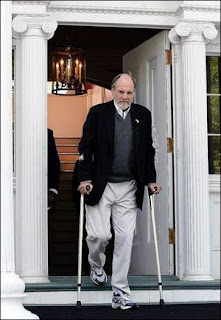 His poor example is known to all: speeding at 91 mph on the Garden State Parkway, which endangered others, and not wearing a seat belt, which nearly cost him his life in the ensuing crash. The good that should emerge from this near-tragedy is that individuals and families will be more safety-conscious in the upcoming summer months.
According to the National Youth Risk Behavior Survey (YRBS), 18 percent of students in ninth through 12th grades "rarely or never wear seat belts" when riding in a car driven by someone else. Not only must parents set a good example by buckling up, they must use the proper car seat for a child, starting from a baby's first ride home from the hospital. Inappropriately restrained children are 3.5 times more likely to suffer a severe injury in a crash. And what is the excuse that parents usually give for not using a child safety seat? Because "their child does not like it." Unforgivable!
Equally unforgivable is leaving a child unattended in a car. One in five parents rarely or never lock their cars at home. In 2003, 36 children died in hot cars. Additionally, if a child is left alone in a car with the keys, he can start the car, slip the car into gear, and cause considerable damage to himself and others. Recommendation: Lock your car at all times and never leave a child in a car unattended, even for two minutes.
Here's some more safety advice:
Bicycles: Properly fitted helmets are 85 percent effective in reducing head injuries. This pertains to skates, scooters and skateboards as well. Isn't it a disturbing coincidence that 86 percent of students (grades 9-12) rarely or never wear bicycle helmets? (YRBS)
Sports: According to the U.S. Eye Injury Registry, 38 percent of all sports-related eye injuries result from baseball or softball. These sports are the main cause of facial injuries and eye injuries that can result in loss of vision. For $10, players can be equipped with a polycarbonate face guard on their batting helmets.
Pools: An adult must be within arm's length of a small child in a pool. And the adult must pay attention to the child. A small child can quickly drown in a kiddie pool, where the water is not even over the child's head. Swimming pool fences with self-latching gates are imperative for preventing pool drowning.
Sunburn: Millions of Americans get tans to improve their appearance, even though exposure to ultraviolet radiation is the most common cause of skin cancer. The American Cancer Society estimates that 60,000 adults in the United States will be diagnosed with melanoma; approximately 7,700 will die from it this year. Pediatric melanoma is rapidly increasing as well. Parents must set a good example by using sunscreen (even on cloudy days), wearing sun-resistant clothing/hat, avoiding the sun from 10 a.m. to 4 p.m. and never getting sunburn.
Last, is a topic that is dear to our hearts (and stomachs) — obesity. It is common knowledge that obesity rates in the United States have skyrocketed in the past 20 years. Children who tend to be sedentary, will burn less calories. Who bothers to go outside and play when 38 percent of ninth- through 12-graders watch three or more hours of TV on a school day (YRBS)? And what's on TV? Frequent advertisements for junk food and supersized portions.
Physical Activity is imperative for addressing the obesity epidemic. While 44 percent of students are trying to lose weight, a mere 28 percent of students attend physical education class daily (YRBS). And parents should make every effort to have dinner with their children each night. It is one of the best ways to set a good example for eating properly and to have quality conversation time, provided the television stays off.
One last point regarding Governor Corzine as a role model: Apologizing for mistakes that affect others does "set the right kind of example."
"Be Counted" columnist Dr. Alan M. Singer blogs at http://www.familythinking.com/. He is a marriage therapist in Highland Park and can be reached at DrAlanSinger@aol.com
Upon his release from the hospital, Gov. Jon S. Corzine remarked, "I set a very poor example for a lot of young people — a lot of people in general." He added, "I hope the state will forgive me, and I'll work very hard to set the right kind of example."
 His poor example is known to all: speeding at 91 mph on the Garden State Parkway, which endangered others, and not wearing a seat belt, which nearly cost him his life in the ensuing crash. The good that should emerge from this near-tragedy is that individuals and families will be more safety-conscious in the upcoming summer months.
According to the National Youth Risk Behavior Survey (YRBS), 18 percent of students in ninth through 12th grades "rarely or never wear seat belts" when riding in a car driven by someone else. Not only must parents set a good example by buckling up, they must use the proper car seat for a child, starting from a baby's first ride home from the hospital. Inappropriately restrained children are 3.5 times more likely to suffer a severe injury in a crash. And what is the excuse that parents usually give for not using a child safety seat? Because "their child does not like it." Unforgivable!
Equally unforgivable is leaving a child unattended in a car. One in five parents rarely or never lock their cars at home. In 2003, 36 children died in hot cars. Additionally, if a child is left alone in a car with the keys, he can start the car, slip the car into gear, and cause considerable damage to himself and others. Recommendation: Lock your car at all times and never leave a child in a car unattended, even for two minutes.
Here's some more safety advice:
Bicycles: Properly fitted helmets are 85 percent effective in reducing head injuries. This pertains to skates, scooters and skateboards as well. Isn't it a disturbing coincidence that 86 percent of students (grades 9-12) rarely or never wear bicycle helmets? (YRBS)
Sports: According to the U.S. Eye Injury Registry, 38 percent of all sports-related eye injuries result from baseball or softball. These sports are the main cause of facial injuries and eye injuries that can result in loss of vision. For $10, players can be equipped with a polycarbonate face guard on their batting helmets.
Pools: An adult must be within arm's length of a small child in a pool. And the adult must pay attention to the child. A small child can quickly drown in a kiddie pool, where the water is not even over the child's head. Swimming pool fences with self-latching gates are imperative for preventing pool drowning.
Sunburn: Millions of Americans get tans to improve their appearance, even though exposure to ultraviolet radiation is the most common cause of skin cancer. The American Cancer Society estimates that 60,000 adults in the United States will be diagnosed with melanoma; approximately 7,700 will die from it this year. Pediatric melanoma is rapidly increasing as well. Parents must set a good example by using sunscreen (even on cloudy days), wearing sun-resistant clothing/hat, avoiding the sun from 10 a.m. to 4 p.m. and never getting sunburn.
Last, is a topic that is dear to our hearts (and stomachs) — obesity. It is common knowledge that obesity rates in the United States have skyrocketed in the past 20 years. Children who tend to be sedentary, will burn less calories. Who bothers to go outside and play when 38 percent of ninth- through 12-graders watch three or more hours of TV on a school day (YRBS)? And what's on TV? Frequent advertisements for junk food and supersized portions.
Physical Activity is imperative for addressing the obesity epidemic. While 44 percent of students are trying to lose weight, a mere 28 percent of students attend physical education class daily (YRBS). And parents should make every effort to have dinner with their children each night. It is one of the best ways to set a good example for eating properly and to have quality conversation time, provided the television stays off.
One last point regarding Governor Corzine as a role model: Apologizing for mistakes that affect others does "set the right kind of example."
"Be Counted" columnist Dr. Alan M. Singer blogs at http://www.familythinking.com/. He is a marriage therapist in Highland Park and can be reached at DrAlanSinger@aol.com
Subscribe to:
Posts (Atom)


 Saving Marriages Strained By The Recession
 Does size matter? For today's families it does
 Shaky Economy Means Bye-Bye Baby for Some
 Posts
Posts

