June is the time for weddings and this essay which the Home News printed on 06/20/07 is as personal as it gets. I describe the custom of using a Talis (prayer shawl) as a Chupa (wedding canopy).
June is the most popular month for weddings. Over the centuries, a custom evolved in Jewish communities to use a prayer shawl (tallis) as a wedding canopy (chupa). My in-laws gave me one shawl for weekdays and one for Sabbath. I attached my Sabbath shawl to the ceiling of our wedding canopy, knowing that the Sabbath and holidays would provide the best time for connection with family and tradition, like our wedding did. During our 30 years of marriage, I noticed my shawl getting a bit tattered and yellowed. Today's consumer culture would likely suggest that I purchase a new model. That won't happen, because I like the warmth and recollections of the real article.
The daily blessing on the shawl refers to protection and elevation. Until our wedding, it was my parents who were responsible to protect and elevate me; after that, it would be my wife.
My shawl surrounds me with memories. It reminds me of who stood under our canopy and witnessed our vows of commitment, especially my parents (of blessed memory) and the decades of watching their marriage.
My parents weren't keen on saying "I love you" in public to each other. But I remember them demonstrating it in little ways. The daily hello/goodbye kiss was important, as was the good-morning/night kiss. Dad checked on Mom's car daily: tires, oil, and wiper fluid; everything had to be safe. Mom would buy Dad record albums of opera music and tape it so he could listen in his car.
I marveled at how, despite their different upbringings, they enjoyed many activities together. Dad, a mechanical engineer, loved skiing, boating, and raising orchids. Mom, a teacher and pianist, was raised in the Midwest surrounded by fine arts and activism. Opera night in South Florida was a revered time that my parents enjoyed together in their front-row seats.
Mom was more emotional; Dad was more physical. She loved to read; he loved to build and repair things. Only after I was married, did I realize that their marriage didn't last despite their differences; rather it thrived because of them.
Concerning parenting skills, they were of one mind. That consistency has been a model for how my wife and I raise our four children. When I broke a rule and needed disciplining, I would receive a deep-voiced reprimand from my father, "Your mother and I do not approve of how you acted."
As a child, I was sad when a good friend and his mother left their home on my block and moved into the tall building on Parkview Point. That's when I first heard the d-word — divorce. That was in the '60s, when the divorce rate in the United States began to soar. I wondered how a family problem or argument could be so severe that parents would divorce, but then came the night of the flying dishes.
My father decided to help his friend Milton in a run for City Council in Miami Beach. For three weeks, he never came home until after midnight when everyone was asleep. Our family dinners continued, but it was Mom and her boys; we hardly saw Dad. (It's interesting that my parents knew the importance of the family dinner ritual back then.) My mother was fed up. She could not endure raising three sons by herself, so things got nasty. One night we awoke to the sound of Mom smashing dishes and yelling at Dad. My father convinced her to stop her tantrum by promising to resign from Milton's political campaign. Our house was quiet again, although in a state of disorder.
I couldn't sleep that night because I assumed the d-word was next and we would be moving to Parkview Point. But the next morning, Dad brought Mom coffee and checked the fluids in her car. He took his morning bike ride with his best friend Milton and resigned from his campaign. He apologized to Mom, kissed her goodbye and went to work. That day I learned what forgiveness means in a marriage.
These are some of the warm memories that envelop me as I wear the prayer shawl that was our wedding canopy. Five years ago, one of the fringes of my shawl tore off, rendering it unsuitable for use. I could have disposed of it but I realized that when something precious breaks, you don't toss it, you fix it. That's one more lesson my prayer shawl taught me about marriage. This column is dedicated to my son Noam and his new bride Rachel.
"Be Counted" columnist Dr. Alan Singer blogs at http://www.familythinking.com/ He is a marriage therapist in Highland Park and can be reached at DrAlanSinger@aol.com
Wednesday, June 20, 2007

Wednesday, May 16, 2007
Lessons for Kids in Mistakes of Our Repentant Governor by Dr. Alan Singer
Governor Jon Corzine's near fatal accident prompted me to put together this piece on Safety for families which the Home News Tribune published on 5/16/07
Upon his release from the hospital, Gov. Jon S. Corzine remarked, "I set a very poor example for a lot of young people — a lot of people in general." He added, "I hope the state will forgive me, and I'll work very hard to set the right kind of example."
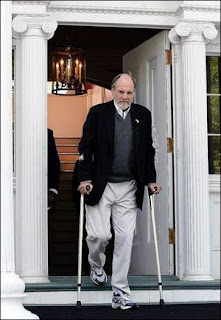 His poor example is known to all: speeding at 91 mph on the Garden State Parkway, which endangered others, and not wearing a seat belt, which nearly cost him his life in the ensuing crash. The good that should emerge from this near-tragedy is that individuals and families will be more safety-conscious in the upcoming summer months.
According to the National Youth Risk Behavior Survey (YRBS), 18 percent of students in ninth through 12th grades "rarely or never wear seat belts" when riding in a car driven by someone else. Not only must parents set a good example by buckling up, they must use the proper car seat for a child, starting from a baby's first ride home from the hospital. Inappropriately restrained children are 3.5 times more likely to suffer a severe injury in a crash. And what is the excuse that parents usually give for not using a child safety seat? Because "their child does not like it." Unforgivable!
Equally unforgivable is leaving a child unattended in a car. One in five parents rarely or never lock their cars at home. In 2003, 36 children died in hot cars. Additionally, if a child is left alone in a car with the keys, he can start the car, slip the car into gear, and cause considerable damage to himself and others. Recommendation: Lock your car at all times and never leave a child in a car unattended, even for two minutes.
Here's some more safety advice:
Bicycles: Properly fitted helmets are 85 percent effective in reducing head injuries. This pertains to skates, scooters and skateboards as well. Isn't it a disturbing coincidence that 86 percent of students (grades 9-12) rarely or never wear bicycle helmets? (YRBS)
Sports: According to the U.S. Eye Injury Registry, 38 percent of all sports-related eye injuries result from baseball or softball. These sports are the main cause of facial injuries and eye injuries that can result in loss of vision. For $10, players can be equipped with a polycarbonate face guard on their batting helmets.
Pools: An adult must be within arm's length of a small child in a pool. And the adult must pay attention to the child. A small child can quickly drown in a kiddie pool, where the water is not even over the child's head. Swimming pool fences with self-latching gates are imperative for preventing pool drowning.
Sunburn: Millions of Americans get tans to improve their appearance, even though exposure to ultraviolet radiation is the most common cause of skin cancer. The American Cancer Society estimates that 60,000 adults in the United States will be diagnosed with melanoma; approximately 7,700 will die from it this year. Pediatric melanoma is rapidly increasing as well. Parents must set a good example by using sunscreen (even on cloudy days), wearing sun-resistant clothing/hat, avoiding the sun from 10 a.m. to 4 p.m. and never getting sunburn.
Last, is a topic that is dear to our hearts (and stomachs) — obesity. It is common knowledge that obesity rates in the United States have skyrocketed in the past 20 years. Children who tend to be sedentary, will burn less calories. Who bothers to go outside and play when 38 percent of ninth- through 12-graders watch three or more hours of TV on a school day (YRBS)? And what's on TV? Frequent advertisements for junk food and supersized portions.
Physical Activity is imperative for addressing the obesity epidemic. While 44 percent of students are trying to lose weight, a mere 28 percent of students attend physical education class daily (YRBS). And parents should make every effort to have dinner with their children each night. It is one of the best ways to set a good example for eating properly and to have quality conversation time, provided the television stays off.
One last point regarding Governor Corzine as a role model: Apologizing for mistakes that affect others does "set the right kind of example."
"Be Counted" columnist Dr. Alan M. Singer blogs at http://www.familythinking.com/. He is a marriage therapist in Highland Park and can be reached at DrAlanSinger@aol.com
Upon his release from the hospital, Gov. Jon S. Corzine remarked, "I set a very poor example for a lot of young people — a lot of people in general." He added, "I hope the state will forgive me, and I'll work very hard to set the right kind of example."
 His poor example is known to all: speeding at 91 mph on the Garden State Parkway, which endangered others, and not wearing a seat belt, which nearly cost him his life in the ensuing crash. The good that should emerge from this near-tragedy is that individuals and families will be more safety-conscious in the upcoming summer months.
According to the National Youth Risk Behavior Survey (YRBS), 18 percent of students in ninth through 12th grades "rarely or never wear seat belts" when riding in a car driven by someone else. Not only must parents set a good example by buckling up, they must use the proper car seat for a child, starting from a baby's first ride home from the hospital. Inappropriately restrained children are 3.5 times more likely to suffer a severe injury in a crash. And what is the excuse that parents usually give for not using a child safety seat? Because "their child does not like it." Unforgivable!
Equally unforgivable is leaving a child unattended in a car. One in five parents rarely or never lock their cars at home. In 2003, 36 children died in hot cars. Additionally, if a child is left alone in a car with the keys, he can start the car, slip the car into gear, and cause considerable damage to himself and others. Recommendation: Lock your car at all times and never leave a child in a car unattended, even for two minutes.
Here's some more safety advice:
Bicycles: Properly fitted helmets are 85 percent effective in reducing head injuries. This pertains to skates, scooters and skateboards as well. Isn't it a disturbing coincidence that 86 percent of students (grades 9-12) rarely or never wear bicycle helmets? (YRBS)
Sports: According to the U.S. Eye Injury Registry, 38 percent of all sports-related eye injuries result from baseball or softball. These sports are the main cause of facial injuries and eye injuries that can result in loss of vision. For $10, players can be equipped with a polycarbonate face guard on their batting helmets.
Pools: An adult must be within arm's length of a small child in a pool. And the adult must pay attention to the child. A small child can quickly drown in a kiddie pool, where the water is not even over the child's head. Swimming pool fences with self-latching gates are imperative for preventing pool drowning.
Sunburn: Millions of Americans get tans to improve their appearance, even though exposure to ultraviolet radiation is the most common cause of skin cancer. The American Cancer Society estimates that 60,000 adults in the United States will be diagnosed with melanoma; approximately 7,700 will die from it this year. Pediatric melanoma is rapidly increasing as well. Parents must set a good example by using sunscreen (even on cloudy days), wearing sun-resistant clothing/hat, avoiding the sun from 10 a.m. to 4 p.m. and never getting sunburn.
Last, is a topic that is dear to our hearts (and stomachs) — obesity. It is common knowledge that obesity rates in the United States have skyrocketed in the past 20 years. Children who tend to be sedentary, will burn less calories. Who bothers to go outside and play when 38 percent of ninth- through 12-graders watch three or more hours of TV on a school day (YRBS)? And what's on TV? Frequent advertisements for junk food and supersized portions.
Physical Activity is imperative for addressing the obesity epidemic. While 44 percent of students are trying to lose weight, a mere 28 percent of students attend physical education class daily (YRBS). And parents should make every effort to have dinner with their children each night. It is one of the best ways to set a good example for eating properly and to have quality conversation time, provided the television stays off.
One last point regarding Governor Corzine as a role model: Apologizing for mistakes that affect others does "set the right kind of example."
"Be Counted" columnist Dr. Alan M. Singer blogs at http://www.familythinking.com/. He is a marriage therapist in Highland Park and can be reached at DrAlanSinger@aol.com
Tuesday, April 17, 2007
Couple Didn't Let Early Ruts Throw Marriage Off Course by Dr. Alan Singer
The Home News printed part 2 of my 60th Anniversary interview with the Levys on 04/17/07. See how intuitive they were to spot problems in their marriage early on and how they went about solving them.
 Last month, I described the 60-year marriage of the Levys, who shared their pearls of marital wisdom with me. They described how they met, and Leah stressed that spouses should express hurt, not anger. Among Martin's themes were: Don't take your wife for granted, and solve problems that you have with each other before going to sleep.
Our conversation took an interesting turn when Leah explained that she and Martin got married at a young age and that caused problems. Leah: "We had our ups and downs when our two kids were teenagers, so we decided to go to a marriage counselor, and he helped us a great deal. Years ago, you didn't think about divorce, but that's the first thing people do now. I have no idea why; you try to work things out."
Martin said he and Leah have strong characters and neither one backs down easily. They wanted a third party to be involved, and so they saw a marriage counselor for a year to learn ways to get along better. Their two children were happy about the counseling, because it helped the whole family. Martin: "We told our kids that we're having problems understanding one another, but we do not want a divorce and they accepted it." Leah, who still believes that the problems were due to immaturity, commented: "I don't think I handled the stress of family life so well. I had in-law problems, often due to things that I was oversensitive about. Looking back, it was silly, because my husband and I were often arguing about something my in-laws said or did.
When I asked Martin for an example of what caused their in-law-related fights he explained, "My parents lived a block away from us. My mother would watch out the window and tell my daughter Devora to come in and visit on her way home from school. My mother did not have the sense to call my wife, even after two hours went by. Leah would panic justifiably, and scream, "Where is my daughter? Where is my little girl?' "
I asked Martin why he didn't take his mother to task and tell her it was wrong to keep Devora in her home while not informing Leah. Martin: "In my family, if I were to criticize my mother, she would close up and not talk to me for a year, and you could never challenge my father. If you did, he'd cut you off, and stop talking to you. I'd tell Leah to ignore them; this is who they are and you're not going to change them." Leah inserts, "But I tried to change them."
"The most important thing our marriage counselor taught us," explained Leah, "is stick to the subject of your argument, and don't throw in 20 years of old topics. The whole idea of marriage is a partnership. Our counselor told us that there are times when it will be 80/20, and then it will turn around and be 20/80; it's never 50/50. He was a bright and sweet guy."
One last bit of wisdom from the Levys' 60-year marriage that is fundamental to raising children. "Children should be disciplined," Leah emphasizes, "and I don't mean you have to whip them. They must have order in their lives." (Martin inserts that there should be rules and regulations.) "And I know it's hard, but it's very important to sit down and have dinner together, which we did every night. We had discussions at dinner about what was bothering us. Our children could even complain about us, too, as long as it was done respectfully."
The values and wisdom of the Levys continue to be transmitted to the next generation. When their oldest grandson complimented his mother Devora on how supportive she was in resolving a problem that he experienced, he turned to his grandmother Leah and declared, "Why wouldn't my Mom be very helpful, when her mother is such a great mother?"
Be Counted columnist Dr. Alan Singer blogs at http://www.familythinking.com/. He is a marriage therapist in Highland Park and can be reached at DrAlanSinger@aol.com.
 Last month, I described the 60-year marriage of the Levys, who shared their pearls of marital wisdom with me. They described how they met, and Leah stressed that spouses should express hurt, not anger. Among Martin's themes were: Don't take your wife for granted, and solve problems that you have with each other before going to sleep.
Our conversation took an interesting turn when Leah explained that she and Martin got married at a young age and that caused problems. Leah: "We had our ups and downs when our two kids were teenagers, so we decided to go to a marriage counselor, and he helped us a great deal. Years ago, you didn't think about divorce, but that's the first thing people do now. I have no idea why; you try to work things out."
Martin said he and Leah have strong characters and neither one backs down easily. They wanted a third party to be involved, and so they saw a marriage counselor for a year to learn ways to get along better. Their two children were happy about the counseling, because it helped the whole family. Martin: "We told our kids that we're having problems understanding one another, but we do not want a divorce and they accepted it." Leah, who still believes that the problems were due to immaturity, commented: "I don't think I handled the stress of family life so well. I had in-law problems, often due to things that I was oversensitive about. Looking back, it was silly, because my husband and I were often arguing about something my in-laws said or did.
When I asked Martin for an example of what caused their in-law-related fights he explained, "My parents lived a block away from us. My mother would watch out the window and tell my daughter Devora to come in and visit on her way home from school. My mother did not have the sense to call my wife, even after two hours went by. Leah would panic justifiably, and scream, "Where is my daughter? Where is my little girl?' "
I asked Martin why he didn't take his mother to task and tell her it was wrong to keep Devora in her home while not informing Leah. Martin: "In my family, if I were to criticize my mother, she would close up and not talk to me for a year, and you could never challenge my father. If you did, he'd cut you off, and stop talking to you. I'd tell Leah to ignore them; this is who they are and you're not going to change them." Leah inserts, "But I tried to change them."
"The most important thing our marriage counselor taught us," explained Leah, "is stick to the subject of your argument, and don't throw in 20 years of old topics. The whole idea of marriage is a partnership. Our counselor told us that there are times when it will be 80/20, and then it will turn around and be 20/80; it's never 50/50. He was a bright and sweet guy."
One last bit of wisdom from the Levys' 60-year marriage that is fundamental to raising children. "Children should be disciplined," Leah emphasizes, "and I don't mean you have to whip them. They must have order in their lives." (Martin inserts that there should be rules and regulations.) "And I know it's hard, but it's very important to sit down and have dinner together, which we did every night. We had discussions at dinner about what was bothering us. Our children could even complain about us, too, as long as it was done respectfully."
The values and wisdom of the Levys continue to be transmitted to the next generation. When their oldest grandson complimented his mother Devora on how supportive she was in resolving a problem that he experienced, he turned to his grandmother Leah and declared, "Why wouldn't my Mom be very helpful, when her mother is such a great mother?"
Be Counted columnist Dr. Alan Singer blogs at http://www.familythinking.com/. He is a marriage therapist in Highland Park and can be reached at DrAlanSinger@aol.com.
Thursday, April 05, 2007
A Classroom of Monkey Bars and Slides
Jane Brody's writings in the NYTimes are always worthwhile. In this piece, she discusses "play" in modern times, where adults "help" children play, and how playgrounds have become so safe that they are boring. While I am one of those paranoid parents who gasped in the playground at each booboo, there is much merit in letting kids be kids at play and not manipulating or orchestrating their outdoor fun.
By JANE E. BRODY NY Times April 3, 2007
I remember fondly a joy-filled childhood in which we came home from school, gobbled down a snack and ran out to play until dark. We made up games, taught each other to roller skate and ride bicycles, ran and jumped, climbed and fell, fought and negotiated, and generally had lots of fun without adults telling us what to do.
In playgrounds, we climbed high slides, going up the ladder and the slide itself; soared on swings; swung from monkey bars; and seesawed, carefully balancing weight by moving up or down on the seat.
Play has taken on new forms in these “modern” times. Adults hover over preschoolers, “helping” them play nicely and preventing them from hurting themselves or others. For first graders and beyond, if they have any free time at all, most playgrounds have become so safe as to be utterly boring.
Unfettered playtime is more and more consumed, in school and at home, by academic programs, electronic media and games, and adult-organized activities at the expense of children’s physical, emotional and social development, say experts on play and its role in child development.
To read more of the article, please click on the title of this post.
By JANE E. BRODY NY Times April 3, 2007
I remember fondly a joy-filled childhood in which we came home from school, gobbled down a snack and ran out to play until dark. We made up games, taught each other to roller skate and ride bicycles, ran and jumped, climbed and fell, fought and negotiated, and generally had lots of fun without adults telling us what to do.
In playgrounds, we climbed high slides, going up the ladder and the slide itself; soared on swings; swung from monkey bars; and seesawed, carefully balancing weight by moving up or down on the seat.
Play has taken on new forms in these “modern” times. Adults hover over preschoolers, “helping” them play nicely and preventing them from hurting themselves or others. For first graders and beyond, if they have any free time at all, most playgrounds have become so safe as to be utterly boring.
Unfettered playtime is more and more consumed, in school and at home, by academic programs, electronic media and games, and adult-organized activities at the expense of children’s physical, emotional and social development, say experts on play and its role in child development.
To read more of the article, please click on the title of this post.
Tuesday, March 27, 2007
Early Child Care Linked to Increases in Vocabulary, Problem Behaviors in 5th and 6th Grades
The media is buzzing about these latest results from the ongoing NIH study of 1,364 children. It is worth reading if you currently use child care. As you can see from the excerpt below, "Parenting quality was a much more important predictor of child development than was type, quantity, or quality, of child care" and I believe that is the key.
The most recent analysis of a long-term NIH-funded study found that children who received higher quality child care before entering kindergarten had better vocabulary scores in the fifth grade than did children who received lower quality care.
The study authors also found that the more time children spent in center-based care before kindergarten, the more likely their sixth grade teachers were to report such problem behaviors as "gets in many fights," "disobedient at school," and "argues a lot."
However, the researchers cautioned that the increase in vocabulary and problem behaviors was small, and that parenting quality was a much more important predictor of child development than was type, quantity, or quality, of child care. The study appears in the March/April 2007, issue of Child Development. Jay Belsky, Ph.D., Director of the Institute for the Study of Children, Families and Social Issues and Professor of Psychology at Birkbeck University of London, was the first author of the current article.
To read the entire NIH News release, click on the title of this blog post.
Subscribe to:
Posts (Atom)


 Saving Marriages Strained By The Recession
 Does size matter? For today's families it does
 Shaky Economy Means Bye-Bye Baby for Some
 Posts
Posts


