Dinner with your Family, what's the big deal? It's actually quite a big deal and is very beneficial to your children and your entire family. Here's my column that the Home News published on 09/18/07. Please make a special effort to have dinner with your family on September 24th.
It's hard to believe that something that is so easy to do can be so good for you and your children: eating dinner together. A 2004 study of 4,746 children 11 to 18 years old, published in the Archives of Pediatrics and Adolescent Medicine, found that frequent family meals were associated with lower risk of smoking, drinking and use of controlled substances such as marijuana. The same study found that teens who ate meals with their family had a lower incidence of depressive symptoms and suicidal thoughts. According to the National Center on Addiction and Substance Abuse at Columbia University, "Teens who have frequent family dinners are likelier to get better grades in school, and higher academic performance is associated with lower substance abuse risk."
Rising rates of childhood obesity are a well-known concern of many parents. In 2000, a research team at Harvard studied 16,000 children of nurses and found that children who eat with their parents tend to have healthier eating habits than those who rarely do. The study, published in the Archives of Family Medicine, found that children who had family meals were 1.5 times as likely to eat five servings of fruits and vegetables every day as those who seldom ate with parents. The authors of the study also noted that these children had healthier diets throughout the day.
Why is the family dinner such a positive experience? It is an established daily gathering where family members can talk, bond, benefit from stress-free time together, and enjoy each other's company. To maximize the positive experience, phones should not be answered and the television should be turned off.
More than a decade's worth of research by CASA (http://www.casacolumbia.org/) has led to several important findings. "Compared to teens that have five or more family dinners per week, those who have two or fewer are: more than twice as likely to have tried cigarettes, 1.5 times likelier to have tried alcohol, and twice as likely to have tried marijuana."
CASA's literature also states with regard to parental engagement: "Parents who have infrequent family dinners are: five times likelier to say they have a fair or poor relationship with their teen, 1.5 times likelier to say they know the parents of their teen's friends — not very well or not at all, and more than twice as likely to say they do not know the names of their teen's teachers."
Important CASA data shows that 58 percent of teens report having dinner with their families at least five times a week, which is up from 47 percent in 1998.
One specific project of CASA is "Family Day," which deserves our support (for our own good). You don"t need to pledge money, write letters to legislators, or attend a rally — just show up at your own dinner table next Monday (Sept. 24). Read more at http://www.casafamilyday.org/ and remember to keep the television off and let phone calls go to voice mail.
I wanted a New Jersey perspective on these national statistics, so I turned to my friend Bill and his e-mail address book of friends for a quick survey. Bill knows lots of people; he is what Malcolm Gladwell, in the book "Tipping Point", refers to as a "connector." Bill e-mailed his friends asking, "How many nights per week do you eat dinner with your family?" When I tallied the responses, and saw the average was 2.4, I called Bill for his comments.
"My reaction is bittersweet," Bill said, "since I'm glad to know that my own two dinners with my family each week is within the norm of my peer group. But the survey reflects the difficulty of young suburban professionals and business executives who struggle with balancing work and family."
When I asked Bill (who has three children under the age of 7) whether he sees his two dinners-per-week lifestyle changing, he replied: "I definitely do aspire to being at home for dinner more often. Where the rubber hits the road is when my kids become more independent and subject to out-of-home influences and I will surely be there more often." Lauding the importance of family dinners, Bill emphasized, "The home has got to be the hub for family life and communication — the dinner table is the center of the home." So, please put down this paper and write Monday, Sept. 24, on your calendar.
"Be Counted" columnist Dr. Alan Singer is a marriage therapist in Highland Park. Respond to this column at Dr. Singer's blog http://www.familythinking.com/ or e-mail DrAlanSinger@aol.com
Tuesday, September 18, 2007

Thursday, August 23, 2007
Time With Grandparents Most Priceless of Gifts by Dr. Alan Singer
When Robin read my column on middle children, she related the "favoritism" of siblings to her parents' extravagant treatment of her nephew. This column appeared in the Home News Tribune on 08/22/07
Home News Tribune reader Robin e-mailed me with this comment: "After reading your column on middle children, and how they feel neglected because the oldest child and youngest child get so much attention, I want to point out to you that a grandchild creates an even bigger problem. I can't believe the attention that my parents have showered on my nieces and nephews. Can you imagine that my nephew received a $300 video iPod from my parents when the most expensive gift they ever got me as a child was $50?"
Robin makes an excellent point, which falls under the rubric of favoritism. It is detrimental to children, whether they are toddlers or adults, and it is harmful to children, whether it relates to their siblings or their nieces/nephews. The Babylonian Talmud poignantly describes the damage that can result from favoritism. Tractate Sabbath (10B) states, "It was because of what Jacob gave to Joseph in excess of his other sons, that his brothers became jealous of him." The Talmud concludes, "The matter resulted in our forefathers' descent into Egypt."
Don't expect this entire column to discuss favoritism, because it is not one of those issues that can be presented from two points of view. There is no formidable pro-favoritism lobby out there, and there is no scholarly research I know of that has tested favoritism's harm, using a control group. Parents who care about their children cannot make one of them the center of their universe, nor can they do that to a grandchild. Dr. William Doherty of the University of Minnesota explained to his own children, "In the solar system of our family, our marriage is the sun and the children are the planets, rather than the other way around."
I have chosen to use the remaining space here to discuss some important issues that face America's 56 million grandparents that came to light in a poll of 1,419 parents and 1,209 grandparents, which was conducted by Child magazine in December 2006. While it is encouraging to know that 80 percent of the nation's grandparents had visited or spoken with their grandchildren by phone in the past month, according to AARP, it is a bit disheartening to know that 62 percent of grandparents want more time with their grandchildren, and only 47 percent of parents would welcome the extra bonding time. Contact with grandparents is seen as a disruption of the weekly routine and the culprit appears to be overscheduling.
The author of the Child magazine article, Jessica Brown, quotes a grandfather named Doug, who lives 2 1/2 hours away from his son and grandchildren and complains, "I'd love to see my three grandchildren more often, but they have something to do every weekend, basketball, dancing, soccer, you name it." Sadly Doug adds, "The fault is with my son, not the kids, because he should be going out of his way to make time for visits."
With many households facing the dilemma of overscheduling, I'd like to pose these questions: Do parents believe that soccer is a more worthwhile use of their child's time than interaction with his/her extended family? Can the benefits of dancing compare to the priceless conveyance of values, affection, and history that occurs in multigenerational bonding with grandparents?
The survey indicates that the biggest obstacle to closeness is physical distance. Among the respondents, parents and grandparents lived an average of 235 miles from each other. Psychiatrist Arthur Kornhaber, M.D., encourages families to exchange photos and video mail to keep the emotional attachment going. "And if you need to save more money for visits to keep the generations close," he remarked, "consider it spiritual currency."
The Child magazine survey describes discipline as "a hot-button" issue. Brown states that when it comes to critiquing their child's parenting style, 36 percent of grandparents wish they didn't have to bite their tongues. Eighty-one percent of parents think grandparents applaud the tactics they use. In fact, however, only 63 percent of grandparents give their seal of approval.
Does the video iPod that began this column constitute spoiling? Brown indicates, "Only 34 percent of grandparents feel they spoil their grandkids more than the parents do. Instead, a surprising 56 percent of parents own up to playing the role of the chief spoiler." The article quotes Amy, whose mother-in-law brings her 4-year-old a present on each visit: "I understand her desire to do so, but I want my daughter to appreciate gifts, not expect them."
This column is dedicated to our first grandchild, David, born July 19.
"Be Counted" columnist Dr. Alan Singer is a marriage therapist in Highland Park. He can be reached at DrAlanSinger@aol.com. He blogs at www.familythinking.com.
Home News Tribune reader Robin e-mailed me with this comment: "After reading your column on middle children, and how they feel neglected because the oldest child and youngest child get so much attention, I want to point out to you that a grandchild creates an even bigger problem. I can't believe the attention that my parents have showered on my nieces and nephews. Can you imagine that my nephew received a $300 video iPod from my parents when the most expensive gift they ever got me as a child was $50?"
Robin makes an excellent point, which falls under the rubric of favoritism. It is detrimental to children, whether they are toddlers or adults, and it is harmful to children, whether it relates to their siblings or their nieces/nephews. The Babylonian Talmud poignantly describes the damage that can result from favoritism. Tractate Sabbath (10B) states, "It was because of what Jacob gave to Joseph in excess of his other sons, that his brothers became jealous of him." The Talmud concludes, "The matter resulted in our forefathers' descent into Egypt."
Don't expect this entire column to discuss favoritism, because it is not one of those issues that can be presented from two points of view. There is no formidable pro-favoritism lobby out there, and there is no scholarly research I know of that has tested favoritism's harm, using a control group. Parents who care about their children cannot make one of them the center of their universe, nor can they do that to a grandchild. Dr. William Doherty of the University of Minnesota explained to his own children, "In the solar system of our family, our marriage is the sun and the children are the planets, rather than the other way around."
I have chosen to use the remaining space here to discuss some important issues that face America's 56 million grandparents that came to light in a poll of 1,419 parents and 1,209 grandparents, which was conducted by Child magazine in December 2006. While it is encouraging to know that 80 percent of the nation's grandparents had visited or spoken with their grandchildren by phone in the past month, according to AARP, it is a bit disheartening to know that 62 percent of grandparents want more time with their grandchildren, and only 47 percent of parents would welcome the extra bonding time. Contact with grandparents is seen as a disruption of the weekly routine and the culprit appears to be overscheduling.
The author of the Child magazine article, Jessica Brown, quotes a grandfather named Doug, who lives 2 1/2 hours away from his son and grandchildren and complains, "I'd love to see my three grandchildren more often, but they have something to do every weekend, basketball, dancing, soccer, you name it." Sadly Doug adds, "The fault is with my son, not the kids, because he should be going out of his way to make time for visits."
With many households facing the dilemma of overscheduling, I'd like to pose these questions: Do parents believe that soccer is a more worthwhile use of their child's time than interaction with his/her extended family? Can the benefits of dancing compare to the priceless conveyance of values, affection, and history that occurs in multigenerational bonding with grandparents?
The survey indicates that the biggest obstacle to closeness is physical distance. Among the respondents, parents and grandparents lived an average of 235 miles from each other. Psychiatrist Arthur Kornhaber, M.D., encourages families to exchange photos and video mail to keep the emotional attachment going. "And if you need to save more money for visits to keep the generations close," he remarked, "consider it spiritual currency."
The Child magazine survey describes discipline as "a hot-button" issue. Brown states that when it comes to critiquing their child's parenting style, 36 percent of grandparents wish they didn't have to bite their tongues. Eighty-one percent of parents think grandparents applaud the tactics they use. In fact, however, only 63 percent of grandparents give their seal of approval.
Does the video iPod that began this column constitute spoiling? Brown indicates, "Only 34 percent of grandparents feel they spoil their grandkids more than the parents do. Instead, a surprising 56 percent of parents own up to playing the role of the chief spoiler." The article quotes Amy, whose mother-in-law brings her 4-year-old a present on each visit: "I understand her desire to do so, but I want my daughter to appreciate gifts, not expect them."
This column is dedicated to our first grandchild, David, born July 19.
"Be Counted" columnist Dr. Alan Singer is a marriage therapist in Highland Park. He can be reached at DrAlanSinger@aol.com. He blogs at www.familythinking.com.
Tuesday, July 24, 2007
Newlyweds Focus on Fitting Kids Into the Family Picture by Dr. Alan Singer
Deciding when to have children and how many to have, are crtitical decisions that couples are faced with. Here's how I dealt with these topics in an essay that the Home News Tribune published on 07/24/07:
When Arlene, 24, and Jeffrey, 25, who are married for one year, made an appointment to see me, they were very specific about what they wanted to discuss. When is the right time to start having children? Is there an ideal number of children to have and an ideal space between children? There are no easy answers to these questions, but I gave them some guidance based on scientific research and personal experience.
Arlene will not wait until age 30 to have a child. "We want kids when we're younger," she explained, "but it seems like there is always justification for pushing it off. We're always busy; I am studying for a master's in speech pathology and Jeffrey is an IT (information technology) consultant. Based on that, it just gets delayed and delayed, which is not realistic."
They like to travel and feel they should delay having a child to vacation together. "To see the world and not dump our kids at the in-laws," Jeffrey explained, "We really enjoy quality time together. We love sitting and talking, and we are concerned that, once we have kids, it will be a lot harder to have that quality time for the two of us." Arlene adds, "A big concern."
My suggestions were twofold. Continue to seek quality time together. Having a child doesn't mean the end to togetherness. While there is considerable research showing that marital satisfaction decreases with the arrival of each child, it shouldn't become a self-fulfilling prophecy. They will have their quality time again, if they set it as a goal and if they establish a spouse-centered family and not a child-centered family. Second, take vacations now but save some exciting ones to experience as a family. Traveling with children can provide them with enriching experiences and expose them to new cultures and environments.
I assumed they would wait until Arlene finished her degree before having a child. But Arlene surprised Jeffrey by saying, "My career is not that important to me." Looking at Jeffrey, she added: "He was not expecting that; I chose speech therapy because I can make a decent salary working part time and I like to help people." Jeffrey wants her to have a second income so that all income for the family doesn't fall on his shoulders. "I'm in business," says Jeff, "and I remember from my Dad's business that you have good and bad years. I want Arlene's income as backup if I have business problems." Arlene stressed, "Even if he feels more secure by me having the degree, that's worth it."
When our discussion turned to family size, Arlene, who is an only child, said that her personality is geared to having things at home be very quiet. When she spends time with Jeffrey's sister and her three kids, she can't imagine being able to deal with that. Arlene: "I want more than one child, but the thought of three or four overwhelms me. My sister-in-law is so stressed that she can't even do her hair, and she has three terrific kids."
Jeffrey, who grew up with two siblings, wants three children minimum. I suggested it's unproductive for couples to decide their total family size as newlyweds for three reasons. First, fertility is only partially in the hands of the couple; they cannot know the future. Second, a better approach is to decide on each child one at a time, asking: "Are we ready to have a (another) child now?" Third, couples cannot predetermine how much they'll like parenthood; they can only know after experiencing it. After their first child reaches the age of 1, a couple can decide if parenting exceeded, met, or fell short of their expectations. Arlene thought that made more sense than having two kids just because most families have two kids. I also informed them that physicians urge couples to space children two years apart.
Jeffrey ended the session by saying: "We have the kind of marriage that if one of us is upset about something, I insist that we talk it out completely. And 99 percent of the time, we get it out of the way before we fall asleep, which works for us." Arlene concluded: "I'm not worried that Jeffrey will decide to push four kids on me, because he is very sensitive to how I feel about things. And how we relate to each other is more important than a specific number of kids."
In my opinion, this terrific couple will be great, loving parents.
Be Counted columnist Dr. Alan Singer blogs at http://www.familythinking.com/ He is a marriage therapist in Highland Park and can be reached at DrAlanSinger@aol.com
When Arlene, 24, and Jeffrey, 25, who are married for one year, made an appointment to see me, they were very specific about what they wanted to discuss. When is the right time to start having children? Is there an ideal number of children to have and an ideal space between children? There are no easy answers to these questions, but I gave them some guidance based on scientific research and personal experience.
Arlene will not wait until age 30 to have a child. "We want kids when we're younger," she explained, "but it seems like there is always justification for pushing it off. We're always busy; I am studying for a master's in speech pathology and Jeffrey is an IT (information technology) consultant. Based on that, it just gets delayed and delayed, which is not realistic."
They like to travel and feel they should delay having a child to vacation together. "To see the world and not dump our kids at the in-laws," Jeffrey explained, "We really enjoy quality time together. We love sitting and talking, and we are concerned that, once we have kids, it will be a lot harder to have that quality time for the two of us." Arlene adds, "A big concern."
My suggestions were twofold. Continue to seek quality time together. Having a child doesn't mean the end to togetherness. While there is considerable research showing that marital satisfaction decreases with the arrival of each child, it shouldn't become a self-fulfilling prophecy. They will have their quality time again, if they set it as a goal and if they establish a spouse-centered family and not a child-centered family. Second, take vacations now but save some exciting ones to experience as a family. Traveling with children can provide them with enriching experiences and expose them to new cultures and environments.
I assumed they would wait until Arlene finished her degree before having a child. But Arlene surprised Jeffrey by saying, "My career is not that important to me." Looking at Jeffrey, she added: "He was not expecting that; I chose speech therapy because I can make a decent salary working part time and I like to help people." Jeffrey wants her to have a second income so that all income for the family doesn't fall on his shoulders. "I'm in business," says Jeff, "and I remember from my Dad's business that you have good and bad years. I want Arlene's income as backup if I have business problems." Arlene stressed, "Even if he feels more secure by me having the degree, that's worth it."
When our discussion turned to family size, Arlene, who is an only child, said that her personality is geared to having things at home be very quiet. When she spends time with Jeffrey's sister and her three kids, she can't imagine being able to deal with that. Arlene: "I want more than one child, but the thought of three or four overwhelms me. My sister-in-law is so stressed that she can't even do her hair, and she has three terrific kids."
Jeffrey, who grew up with two siblings, wants three children minimum. I suggested it's unproductive for couples to decide their total family size as newlyweds for three reasons. First, fertility is only partially in the hands of the couple; they cannot know the future. Second, a better approach is to decide on each child one at a time, asking: "Are we ready to have a (another) child now?" Third, couples cannot predetermine how much they'll like parenthood; they can only know after experiencing it. After their first child reaches the age of 1, a couple can decide if parenting exceeded, met, or fell short of their expectations. Arlene thought that made more sense than having two kids just because most families have two kids. I also informed them that physicians urge couples to space children two years apart.
Jeffrey ended the session by saying: "We have the kind of marriage that if one of us is upset about something, I insist that we talk it out completely. And 99 percent of the time, we get it out of the way before we fall asleep, which works for us." Arlene concluded: "I'm not worried that Jeffrey will decide to push four kids on me, because he is very sensitive to how I feel about things. And how we relate to each other is more important than a specific number of kids."
In my opinion, this terrific couple will be great, loving parents.
Be Counted columnist Dr. Alan Singer blogs at http://www.familythinking.com/ He is a marriage therapist in Highland Park and can be reached at DrAlanSinger@aol.com
Wednesday, June 20, 2007
Prayer Shawl Envelops Me in Warm Memories of Family by Dr. Alan Singer
June is the time for weddings and this essay which the Home News printed on 06/20/07 is as personal as it gets. I describe the custom of using a Talis (prayer shawl) as a Chupa (wedding canopy).
June is the most popular month for weddings. Over the centuries, a custom evolved in Jewish communities to use a prayer shawl (tallis) as a wedding canopy (chupa). My in-laws gave me one shawl for weekdays and one for Sabbath. I attached my Sabbath shawl to the ceiling of our wedding canopy, knowing that the Sabbath and holidays would provide the best time for connection with family and tradition, like our wedding did. During our 30 years of marriage, I noticed my shawl getting a bit tattered and yellowed. Today's consumer culture would likely suggest that I purchase a new model. That won't happen, because I like the warmth and recollections of the real article.
The daily blessing on the shawl refers to protection and elevation. Until our wedding, it was my parents who were responsible to protect and elevate me; after that, it would be my wife.
My shawl surrounds me with memories. It reminds me of who stood under our canopy and witnessed our vows of commitment, especially my parents (of blessed memory) and the decades of watching their marriage.
My parents weren't keen on saying "I love you" in public to each other. But I remember them demonstrating it in little ways. The daily hello/goodbye kiss was important, as was the good-morning/night kiss. Dad checked on Mom's car daily: tires, oil, and wiper fluid; everything had to be safe. Mom would buy Dad record albums of opera music and tape it so he could listen in his car.
I marveled at how, despite their different upbringings, they enjoyed many activities together. Dad, a mechanical engineer, loved skiing, boating, and raising orchids. Mom, a teacher and pianist, was raised in the Midwest surrounded by fine arts and activism. Opera night in South Florida was a revered time that my parents enjoyed together in their front-row seats.
Mom was more emotional; Dad was more physical. She loved to read; he loved to build and repair things. Only after I was married, did I realize that their marriage didn't last despite their differences; rather it thrived because of them.
Concerning parenting skills, they were of one mind. That consistency has been a model for how my wife and I raise our four children. When I broke a rule and needed disciplining, I would receive a deep-voiced reprimand from my father, "Your mother and I do not approve of how you acted."
As a child, I was sad when a good friend and his mother left their home on my block and moved into the tall building on Parkview Point. That's when I first heard the d-word — divorce. That was in the '60s, when the divorce rate in the United States began to soar. I wondered how a family problem or argument could be so severe that parents would divorce, but then came the night of the flying dishes.
My father decided to help his friend Milton in a run for City Council in Miami Beach. For three weeks, he never came home until after midnight when everyone was asleep. Our family dinners continued, but it was Mom and her boys; we hardly saw Dad. (It's interesting that my parents knew the importance of the family dinner ritual back then.) My mother was fed up. She could not endure raising three sons by herself, so things got nasty. One night we awoke to the sound of Mom smashing dishes and yelling at Dad. My father convinced her to stop her tantrum by promising to resign from Milton's political campaign. Our house was quiet again, although in a state of disorder.
I couldn't sleep that night because I assumed the d-word was next and we would be moving to Parkview Point. But the next morning, Dad brought Mom coffee and checked the fluids in her car. He took his morning bike ride with his best friend Milton and resigned from his campaign. He apologized to Mom, kissed her goodbye and went to work. That day I learned what forgiveness means in a marriage.
These are some of the warm memories that envelop me as I wear the prayer shawl that was our wedding canopy. Five years ago, one of the fringes of my shawl tore off, rendering it unsuitable for use. I could have disposed of it but I realized that when something precious breaks, you don't toss it, you fix it. That's one more lesson my prayer shawl taught me about marriage. This column is dedicated to my son Noam and his new bride Rachel.
"Be Counted" columnist Dr. Alan Singer blogs at http://www.familythinking.com/ He is a marriage therapist in Highland Park and can be reached at DrAlanSinger@aol.com
June is the most popular month for weddings. Over the centuries, a custom evolved in Jewish communities to use a prayer shawl (tallis) as a wedding canopy (chupa). My in-laws gave me one shawl for weekdays and one for Sabbath. I attached my Sabbath shawl to the ceiling of our wedding canopy, knowing that the Sabbath and holidays would provide the best time for connection with family and tradition, like our wedding did. During our 30 years of marriage, I noticed my shawl getting a bit tattered and yellowed. Today's consumer culture would likely suggest that I purchase a new model. That won't happen, because I like the warmth and recollections of the real article.
The daily blessing on the shawl refers to protection and elevation. Until our wedding, it was my parents who were responsible to protect and elevate me; after that, it would be my wife.
My shawl surrounds me with memories. It reminds me of who stood under our canopy and witnessed our vows of commitment, especially my parents (of blessed memory) and the decades of watching their marriage.
My parents weren't keen on saying "I love you" in public to each other. But I remember them demonstrating it in little ways. The daily hello/goodbye kiss was important, as was the good-morning/night kiss. Dad checked on Mom's car daily: tires, oil, and wiper fluid; everything had to be safe. Mom would buy Dad record albums of opera music and tape it so he could listen in his car.
I marveled at how, despite their different upbringings, they enjoyed many activities together. Dad, a mechanical engineer, loved skiing, boating, and raising orchids. Mom, a teacher and pianist, was raised in the Midwest surrounded by fine arts and activism. Opera night in South Florida was a revered time that my parents enjoyed together in their front-row seats.
Mom was more emotional; Dad was more physical. She loved to read; he loved to build and repair things. Only after I was married, did I realize that their marriage didn't last despite their differences; rather it thrived because of them.
Concerning parenting skills, they were of one mind. That consistency has been a model for how my wife and I raise our four children. When I broke a rule and needed disciplining, I would receive a deep-voiced reprimand from my father, "Your mother and I do not approve of how you acted."
As a child, I was sad when a good friend and his mother left their home on my block and moved into the tall building on Parkview Point. That's when I first heard the d-word — divorce. That was in the '60s, when the divorce rate in the United States began to soar. I wondered how a family problem or argument could be so severe that parents would divorce, but then came the night of the flying dishes.
My father decided to help his friend Milton in a run for City Council in Miami Beach. For three weeks, he never came home until after midnight when everyone was asleep. Our family dinners continued, but it was Mom and her boys; we hardly saw Dad. (It's interesting that my parents knew the importance of the family dinner ritual back then.) My mother was fed up. She could not endure raising three sons by herself, so things got nasty. One night we awoke to the sound of Mom smashing dishes and yelling at Dad. My father convinced her to stop her tantrum by promising to resign from Milton's political campaign. Our house was quiet again, although in a state of disorder.
I couldn't sleep that night because I assumed the d-word was next and we would be moving to Parkview Point. But the next morning, Dad brought Mom coffee and checked the fluids in her car. He took his morning bike ride with his best friend Milton and resigned from his campaign. He apologized to Mom, kissed her goodbye and went to work. That day I learned what forgiveness means in a marriage.
These are some of the warm memories that envelop me as I wear the prayer shawl that was our wedding canopy. Five years ago, one of the fringes of my shawl tore off, rendering it unsuitable for use. I could have disposed of it but I realized that when something precious breaks, you don't toss it, you fix it. That's one more lesson my prayer shawl taught me about marriage. This column is dedicated to my son Noam and his new bride Rachel.
"Be Counted" columnist Dr. Alan Singer blogs at http://www.familythinking.com/ He is a marriage therapist in Highland Park and can be reached at DrAlanSinger@aol.com
Wednesday, May 16, 2007
Lessons for Kids in Mistakes of Our Repentant Governor by Dr. Alan Singer
Governor Jon Corzine's near fatal accident prompted me to put together this piece on Safety for families which the Home News Tribune published on 5/16/07
Upon his release from the hospital, Gov. Jon S. Corzine remarked, "I set a very poor example for a lot of young people — a lot of people in general." He added, "I hope the state will forgive me, and I'll work very hard to set the right kind of example."
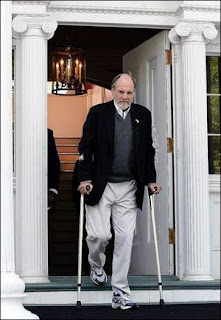 His poor example is known to all: speeding at 91 mph on the Garden State Parkway, which endangered others, and not wearing a seat belt, which nearly cost him his life in the ensuing crash. The good that should emerge from this near-tragedy is that individuals and families will be more safety-conscious in the upcoming summer months.
According to the National Youth Risk Behavior Survey (YRBS), 18 percent of students in ninth through 12th grades "rarely or never wear seat belts" when riding in a car driven by someone else. Not only must parents set a good example by buckling up, they must use the proper car seat for a child, starting from a baby's first ride home from the hospital. Inappropriately restrained children are 3.5 times more likely to suffer a severe injury in a crash. And what is the excuse that parents usually give for not using a child safety seat? Because "their child does not like it." Unforgivable!
Equally unforgivable is leaving a child unattended in a car. One in five parents rarely or never lock their cars at home. In 2003, 36 children died in hot cars. Additionally, if a child is left alone in a car with the keys, he can start the car, slip the car into gear, and cause considerable damage to himself and others. Recommendation: Lock your car at all times and never leave a child in a car unattended, even for two minutes.
Here's some more safety advice:
Bicycles: Properly fitted helmets are 85 percent effective in reducing head injuries. This pertains to skates, scooters and skateboards as well. Isn't it a disturbing coincidence that 86 percent of students (grades 9-12) rarely or never wear bicycle helmets? (YRBS)
Sports: According to the U.S. Eye Injury Registry, 38 percent of all sports-related eye injuries result from baseball or softball. These sports are the main cause of facial injuries and eye injuries that can result in loss of vision. For $10, players can be equipped with a polycarbonate face guard on their batting helmets.
Pools: An adult must be within arm's length of a small child in a pool. And the adult must pay attention to the child. A small child can quickly drown in a kiddie pool, where the water is not even over the child's head. Swimming pool fences with self-latching gates are imperative for preventing pool drowning.
Sunburn: Millions of Americans get tans to improve their appearance, even though exposure to ultraviolet radiation is the most common cause of skin cancer. The American Cancer Society estimates that 60,000 adults in the United States will be diagnosed with melanoma; approximately 7,700 will die from it this year. Pediatric melanoma is rapidly increasing as well. Parents must set a good example by using sunscreen (even on cloudy days), wearing sun-resistant clothing/hat, avoiding the sun from 10 a.m. to 4 p.m. and never getting sunburn.
Last, is a topic that is dear to our hearts (and stomachs) — obesity. It is common knowledge that obesity rates in the United States have skyrocketed in the past 20 years. Children who tend to be sedentary, will burn less calories. Who bothers to go outside and play when 38 percent of ninth- through 12-graders watch three or more hours of TV on a school day (YRBS)? And what's on TV? Frequent advertisements for junk food and supersized portions.
Physical Activity is imperative for addressing the obesity epidemic. While 44 percent of students are trying to lose weight, a mere 28 percent of students attend physical education class daily (YRBS). And parents should make every effort to have dinner with their children each night. It is one of the best ways to set a good example for eating properly and to have quality conversation time, provided the television stays off.
One last point regarding Governor Corzine as a role model: Apologizing for mistakes that affect others does "set the right kind of example."
"Be Counted" columnist Dr. Alan M. Singer blogs at http://www.familythinking.com/. He is a marriage therapist in Highland Park and can be reached at DrAlanSinger@aol.com
Upon his release from the hospital, Gov. Jon S. Corzine remarked, "I set a very poor example for a lot of young people — a lot of people in general." He added, "I hope the state will forgive me, and I'll work very hard to set the right kind of example."
 His poor example is known to all: speeding at 91 mph on the Garden State Parkway, which endangered others, and not wearing a seat belt, which nearly cost him his life in the ensuing crash. The good that should emerge from this near-tragedy is that individuals and families will be more safety-conscious in the upcoming summer months.
According to the National Youth Risk Behavior Survey (YRBS), 18 percent of students in ninth through 12th grades "rarely or never wear seat belts" when riding in a car driven by someone else. Not only must parents set a good example by buckling up, they must use the proper car seat for a child, starting from a baby's first ride home from the hospital. Inappropriately restrained children are 3.5 times more likely to suffer a severe injury in a crash. And what is the excuse that parents usually give for not using a child safety seat? Because "their child does not like it." Unforgivable!
Equally unforgivable is leaving a child unattended in a car. One in five parents rarely or never lock their cars at home. In 2003, 36 children died in hot cars. Additionally, if a child is left alone in a car with the keys, he can start the car, slip the car into gear, and cause considerable damage to himself and others. Recommendation: Lock your car at all times and never leave a child in a car unattended, even for two minutes.
Here's some more safety advice:
Bicycles: Properly fitted helmets are 85 percent effective in reducing head injuries. This pertains to skates, scooters and skateboards as well. Isn't it a disturbing coincidence that 86 percent of students (grades 9-12) rarely or never wear bicycle helmets? (YRBS)
Sports: According to the U.S. Eye Injury Registry, 38 percent of all sports-related eye injuries result from baseball or softball. These sports are the main cause of facial injuries and eye injuries that can result in loss of vision. For $10, players can be equipped with a polycarbonate face guard on their batting helmets.
Pools: An adult must be within arm's length of a small child in a pool. And the adult must pay attention to the child. A small child can quickly drown in a kiddie pool, where the water is not even over the child's head. Swimming pool fences with self-latching gates are imperative for preventing pool drowning.
Sunburn: Millions of Americans get tans to improve their appearance, even though exposure to ultraviolet radiation is the most common cause of skin cancer. The American Cancer Society estimates that 60,000 adults in the United States will be diagnosed with melanoma; approximately 7,700 will die from it this year. Pediatric melanoma is rapidly increasing as well. Parents must set a good example by using sunscreen (even on cloudy days), wearing sun-resistant clothing/hat, avoiding the sun from 10 a.m. to 4 p.m. and never getting sunburn.
Last, is a topic that is dear to our hearts (and stomachs) — obesity. It is common knowledge that obesity rates in the United States have skyrocketed in the past 20 years. Children who tend to be sedentary, will burn less calories. Who bothers to go outside and play when 38 percent of ninth- through 12-graders watch three or more hours of TV on a school day (YRBS)? And what's on TV? Frequent advertisements for junk food and supersized portions.
Physical Activity is imperative for addressing the obesity epidemic. While 44 percent of students are trying to lose weight, a mere 28 percent of students attend physical education class daily (YRBS). And parents should make every effort to have dinner with their children each night. It is one of the best ways to set a good example for eating properly and to have quality conversation time, provided the television stays off.
One last point regarding Governor Corzine as a role model: Apologizing for mistakes that affect others does "set the right kind of example."
"Be Counted" columnist Dr. Alan M. Singer blogs at http://www.familythinking.com/. He is a marriage therapist in Highland Park and can be reached at DrAlanSinger@aol.com
Subscribe to:
Posts (Atom)


 Saving Marriages Strained By The Recession
 Does size matter? For today's families it does
 Shaky Economy Means Bye-Bye Baby for Some
 Posts
Posts

